
The Space Force may invest in a maneuverable space vehicle that can be available for an on-demand launch in response to “emerging threats,” according to a new industry notice.
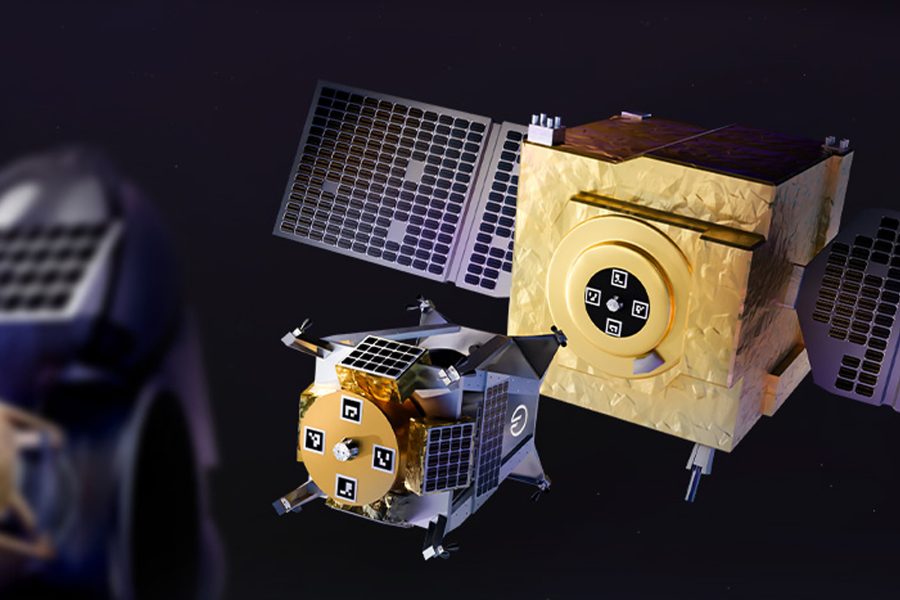
In a Sept. 18 request for information, Space Systems Command’s Space Safari program office—which leads the service’s Tactically Responsive Space program—said they’re interested in buying a commercial spacecraft that can perform what are known as rendezvous proximity operations and dock to other satellites. The notice specifies a potential need for the capability as soon as fiscal 2029.
“[The] Space Safari program rapidly acquires, integrates, and deployed space systems to address urgent combatant commander needs and emerging threats outside traditional programs of record,” the notice states. “To achieve this, the office seeks innovative, cost-efficient solutions for unpredictable mission requirements.”
The notice doesn’t spell out how many of these vehicles the Space Force might buy but identifies a target “tasking-to-launch” timeline of 14 days. It also stresses the need for modular systems that can integrate a variety of payloads should the service need to swap a system at the last minute.
The Space Force defines Tactically Responsive Space, or TacRS, as the ability to quickly respond to on-orbit threats in any number of ways—from launching a rocket on demand to maneuvering an at-the-ready satellite to replace or augment another to buying commercial space capabilities during a conflict.
Space Safari has been demonstrating and progressing new TacRS capabilities over the last few years. In 2023, Firefly’s Alpha rocket launched a Millennium Space Systems payload just 27 hours after receiving launch orders as part of the service’s Victus Nox mission. Then in late 2025 and early 2026, it conducted a tabletop effort and field exercise called Victus Diem aimed at refining its processes for repeatable rapid launch.
In June, the service launched Victus Haze, which focused on validating multiple TacRS concepts, including dynamic space operations between two satellites. In this case, a Rocket Lab satellite launched on demand and a True Anomaly spacecraft prepositioned on orbit took turns playing the role of adversary and conducting “dynamic engagements” including pursuits between the two satellites.
Those demonstrations have put the service on a path toward operationalizing TacRS concepts. The Space Force’s fiscal 2027 budget request, which includes $86 million for TacRS demonstrations, says Space Safari plans to use funding to support “operational missions requiring both rapid launch and maneuverable, prepositioned capabilities.”
The documents also note that the Space Force plans to establish a “rapid reaction force structure” that would involve having satellites in production and on hand, ready for rapid launch as needed. The Sept. 18 notice appears to be an early step in that direction.
In a briefing at AFA’s Air, Space & Cyber conference, acting portfolio acquisition executive for space combat power Col. Bryon McClain told reporters the service is in the process of transitioning TacRS into an “operational system.” He noted that while the Space Force has additional missions planned, it would likely be saying “less and less” about them.
“You’re probably going to hear a lot less about that overall because we see this as an important warfighting capability, and the last thing you want to do is make that too public,” he said Sept. 16.
For now, the five known TacRS missions expected to launch in the next few years are:
- Victus Surgo, a mission cosponsored by the Defense Innovation Unit that will feature a SpaceX Falcon 9 launching a highly maneuverable spacecraft built by Impulse Space
- Victus Salo 1, set to launch in 2027 on a Falcon 9 rocket that will carry a payload built by the Massachusetts Institute of Technology
- Victus Salo 2 and 3, which don’t yet have a public timeline but will involve Impulse Space’s pre-positioned Mira orbital maneuver vehicle
- Victus Sol, launched by Firefly’s Alpha, which will carry an operational payload
