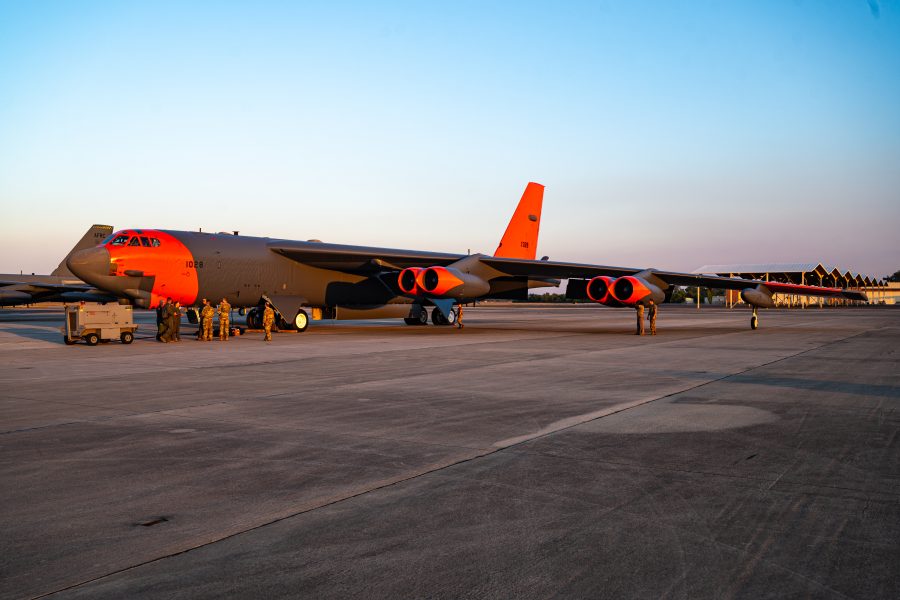
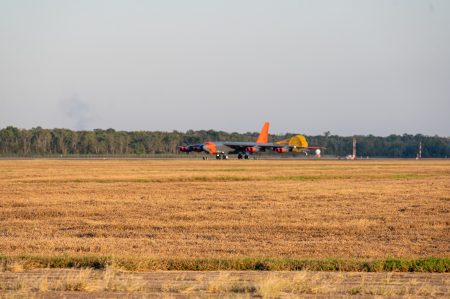
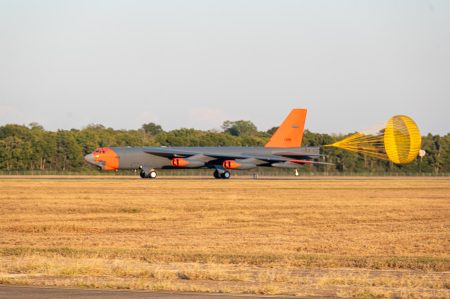
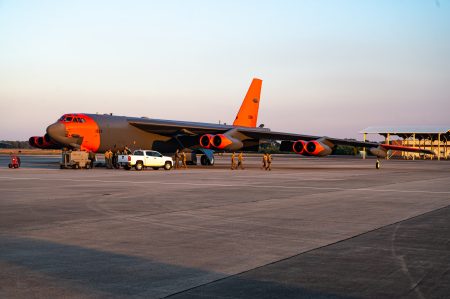
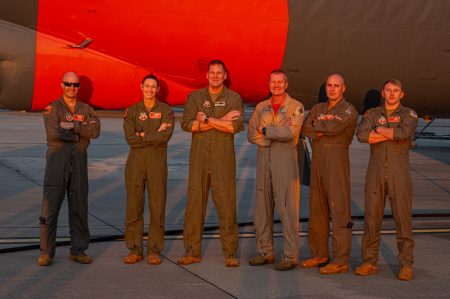
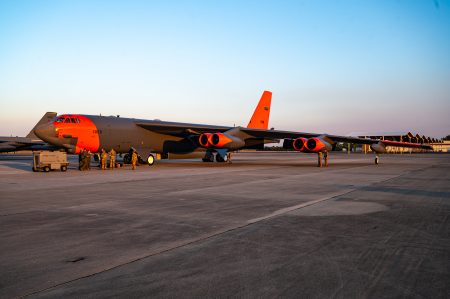
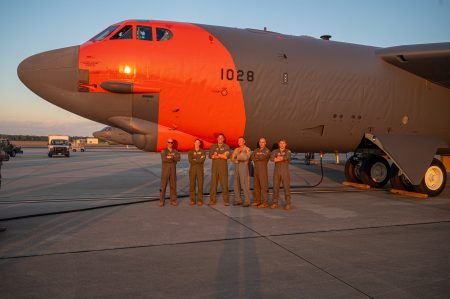
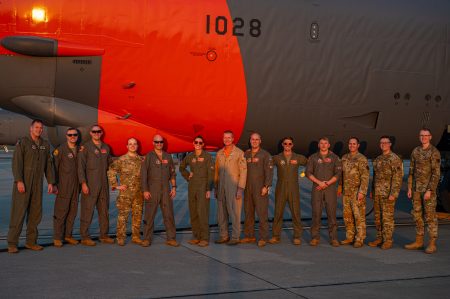
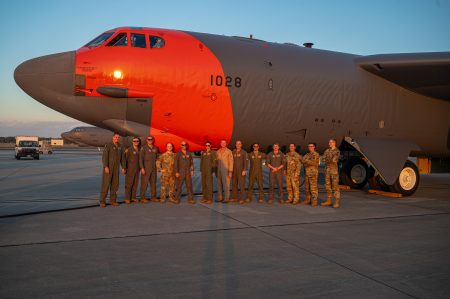
A B-52H Stratofortress with a special orange paint scheme parks after landing at Barksdale Air Force Base, La., Sept. 30, 2024. A heritage orange test and evaluation paint scheme represents a rich history of substantial advancements and progress in the B-52’s lifecycle. (U.S. Air Force photo by Airman 1st Class Aaron Hill)
Audio of this article is brought to you by the Air & Space Forces Association, honoring and supporting our Airmen, Guardians, and their families. Find out more at afa.org
B-52s touch down frequently at Barksdale Air Force Base, La., but the one that landed Sept. 30 looked a little different.
Sporting bright orange paint on the cockpit, wing tips, engine nacelles, and tail, the Stratofortress seemed dressed for an early start to hunting season in Louisiana; in fact, the special paint scheme was a nod to the B-52’s roots more than 60 years ago.
“The orange color represents the test and evaluations conducted during the 1950s and 1960s, honoring the B-52’s history,” the 2nd Bomb Wing noted in a photo caption of the B-52 landing.
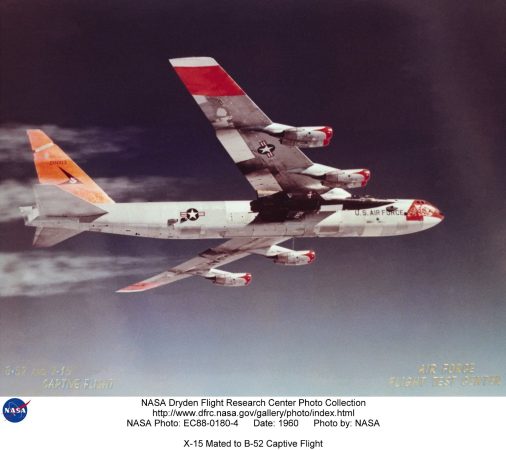
Collectively dubbed “motherships,” the two sported orange markings at times to better identify them as test vehicles. The Buff landing at Barksdale in September matched the pattern on “The High and Mighty One.” That airframe’s orange accents are still on display at the Pima Air & Space Museum in Arizona.
A B-52 mothership carries the X-15 aloft for a research flight in April 1960, leaving behind high-altitude, as Air Force Maj. Robert M. White readies for his first X-15 flight. Courtesy photo/NASA
Fittingly, the orange-accented B-52 that landed at Barksdale is assigned to the 49th Test and Evaluation Squadron, the bombers’ operational testing lead.
A photographer identified as Redhome Aviation posted images to Facebook on Sept. 30, showing the bomber taking off from Tinker Air Force Base, Okla., where B-52s get depot-level maintenance.
The Air Force is upgrading its B-52Hs with new engines, radars, and cockpit equipment over the coming years. The changes will carry a new designator, B-52J, and keep the bombers in service into the 2050s, when the airframes will approach 100 years old.
Audio of this article is brought to you by the Air & Space Forces Association, honoring and supporting our Airmen, Guardians, and their families. Find out more at afa.org
The Air Force has finished resurrecting a B-1B Lancer, completing a yearslong process to transform a bomber that had been stored for parts in the Arizona desert into the new flagship of the 7th Bomb Wing at Dyess Air Force Base, Texas.
Lockheed Martin’s aeronautics division is getting new leadership, with president Greg Ulmer retiring and Skunk Works general manager O.J. Sanchez tapped to succeed him.
F-22 Raptors from two squadrons have arrived at Kadena Air Base in Okinawa, the latest rotation of fighters at the key Japanese base as its awaits its delayed F-15EX Eagle IIs.
Fresh off the first combat deployment of its new EA-37B, the Air Force is nearly doubling the planned number of new electronic attack jets and projecting more than $3 billion in spending on the program in the next five years.
Air Force fighters, tankers, and intelligence aircraft contributed “defensive overwatch” for the U.S. military effort to guide commercial shipping through the Strait of Hormuz, senior officials said.
The Air Force said May 4 it has approved the T-7A Red Hawk trainer aircraft to move into low-rate production and awarded Boeing a $219 million contract to start building the first 14 production jets.
The Air Force is planning to spend $2.19 billion over the next five years to acquire new C-37 jets for transporting military and civilian leaders. That’s on top of another $1.17 billion in projected funding for the VC-25B “Air Force One” replacement.
The Air Force expects to start modifying its first B-52H Stratofortress bomber with new engines and other upgrades later this year, following the successful review of the Commercial Engine Replacement Program’s design.
The Air Force wants to spend more than a half billion dollars through 2031 on a new protection system designed for cargo and refueling aircraft that features onboard sensors and weapons to track and take down enemy missiles and drones.
✓
Thank You!
Check your inbox to verify your email address and finish setting up your AFA account.
★
Welcome Back!
An account with this email already exists. Please log in to continue.
Subscribe to the Air & Space Forces Daily Report
The latest news from Air & Space Forces Magazine, as well as news from other leading publications, delivered right to your inbox every morning!
We’re sorry, there has been an error. Please review your input or try again later.